
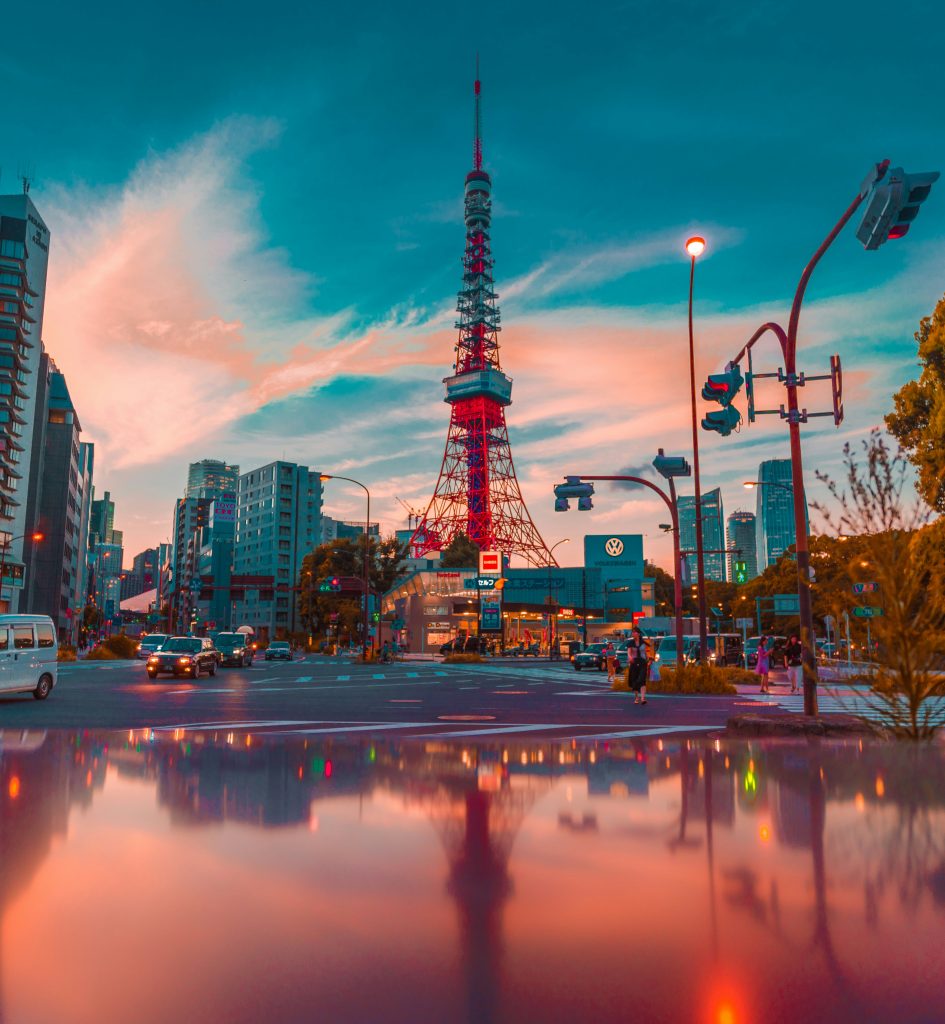

At first glance, building massive AI data centers near places like Tokyo Tower feels irrational.
For decades, data centers followed a simple rule: build where land is cheap. Build where electricity is cheap. Build far away from expensive urban centers.
Traditional computing workloads made this logical. If a webpage loads 200 milliseconds slower, most users never notice. If cloud storage sits thousands of kilometers away, few people care.
So why are companies suddenly putting extremely expensive AI infrastructure in the middle of some of the world’s most expensive cities?
The answer is simple.
AI is changing what computing actually means.
AI Is Moving From “Requested Computing” To “Continuous Computing.”
Most people experience AI today through text. You ask ChatGPT a question. You wait.
The answer appears.
Even when servers are physically located overseas, the experience still works because humans tolerate delay surprisingly well when reading text. But this model breaks down with the next generation of AI.
Future AI increasingly becomes:
- voice agents
- robotics
- autonomous systems
- AR interfaces
- AI-to-AI systems
- embedded infrastructure
These systems cannot tolerate delay in the same way.
Human conversations begin to feel unnatural after roughly 200 milliseconds. Robots require reaction times measured in milliseconds. AR systems become uncomfortable when digital overlays lag behind movement.
As AI increasingly moves from “something you occasionally use” into “something continuously operating around you,” latency stops being a technical optimization. It becomes the product itself.
Physics Suddenly Matters Again
This creates a simple but uncomfortable reality:
Computation must physically move closer to users.
Japan-to-US network traffic already consumes a large portion of acceptable latency budgets.
Add:
- model inference
- audio processing
- Multiple AI systems communicating together
- networking overhead
Suddenly, users stop feeling like they are speaking with AI.
They start feeling like they are waiting.
And waiting destroys experiences.
AI Is Following The Same Path Finance Already Took
This phenomenon already happened once before. Not in AI. In finance.
High-frequency trading firms discovered something simple:
Milliseconds are money. Their response was extreme.
First, they placed servers physically next to exchanges.
Then they built straighter fiber routes. Then they blasted tunnels through mountains.
Eventually, they abandoned fiber altogether because light travels faster through air than through glass.
They built microwave towers.
All of this.To save milliseconds.
AI infrastructure is increasingly following exactly the same economic logic.
Lower latency creates a competitive advantage.
Competitive advantage creates economic value.
Economic value justifies expensive infrastructure.
Why Tokyo?
This explains why companies are increasingly building AI infrastructure directly within cities.
The objective is no longer:
Minimize land cost
The objective becomes:
Minimize distance
Dense urban areas provide:
- network hubs
- enterprise customers
- population density
- existing infrastructure
- proximity to users
This is why companies are willing to place expensive AI infrastructure in places that would historically make little sense.
The Hidden Costs Nobody Talks About
The conversation around AI infrastructure usually focuses on growth.
More AI. More investment. More innovation.
But when infrastructure becomes physical, costs become physical too.
And physical costs are paid locally.
Foreign Capital Changes Local Economics
Large AI projects increasingly involve substantial foreign investment.
This creates new pressures.
Surrounding areas may experience:
- rising commercial property demand
- increased land prices
- competition for industrial space
- pressure on utilities and infrastructure
The concern is not necessarily:
“Foreign money is bad.”
The concern becomes:
Who captures the benefits—and who absorbs the cost?
When infrastructure investment raises surrounding property values, local residents and smaller businesses may experience rising rents and affordability problems without receiving direct benefits.
Electricity Competition Becomes Political
AI data centers consume extraordinary amounts of power.
Some facilities consume electricity equivalent to that of small cities.
This raises questions:
- Will electricity prices rise?
- Who pays for grid upgrades?
- Should infrastructure prioritize residents or industrial consumers?
- Will communities absorb costs for systems primarily serving distant users?
Even when shortages do not exist today, people increasingly worry about future competition for energy resources.
Water Consumption Creates New Friction
Modern data centers require cooling.
Cooling often requires water.
As infrastructure scales, residents increasingly ask:
Why should local communities consume more water resources so distant users can generate AI outputs?
This question becomes more uncomfortable as climate pressures increase.
Noise Pollution Is Frequently Ignored
Data centers appear quiet. They are not.
Large facilities require:
- cooling systems
- generators
- transformers
- ventilation systems
- network equipment
Nearby residents may experience:
- constant background noise
- low-frequency vibration
- nighttime disturbance
A building may visually resemble an office.
Acoustically, it may feel industrial.
Environmental Costs Extend Beyond Buildings
The visible building is only part of the infrastructure.
Supporting systems include:
- substations
- power distribution
- cooling infrastructure
- road construction
- maintenance operations
The economic benefits may be national.The disruption is local.
Why Japan Is Particularly Attractive
Japan occupies an unusual position.
Compared with many developed economies:
- land remains relatively affordable
- The infrastructure is reliable.
- The electricity supply is stable.
- Political risk is relatively low.
- The network infrastructure is strong.
From the perspective of global AI companies:
Japan increasingly looks like an attractive infrastructure.
This creates a difficult emotional reaction.
Nothing may technically be wrong.
Nothing may violate regulations.
Yet something feels unbalanced.
AI Is No Longer Invisible Infrastructure
The most important shift is not technological. It is physical.
Cloud computing once felt invisible.
AI infrastructure increasingly looks like:
- buildings
- cooling systems
- substations
- water consumption
- neighborhood noise
- urban planning disputes
- political decisions
The cloud is becoming visible.
And society has not yet decided:
Where should AI physically live? Who should pay for it? And who should benefit from it?
Because AI is no longer somewhere else. Increasingly,
AI is being built next door.